
The AI Spend Problem Nobody Planned For
When teams start deploying AI agents on AWS — whether through Bedrock, SageMaker, or third-party models — spend tends to scale faster than oversight. A single agent left running can rack up thousands of dollars in a week. Multiply that across a team of developers, and you have a finance problem that quickly becomes a compliance problem.
The issue is not just cost. It is accountability. When an AI agent takes an action — generates output, calls an API, processes customer data — most organizations cannot answer the basic audit questions: who authorized it, what did it do, and how much did it cost?
Why AI Agent Spend Is a Compliance Issue
Regulators and auditors are starting to catch up. SOC 2, ISO 27001, and FedRAMP all require controls around system monitoring, access authorization, and audit logging. AI agents are systems — and the same rules apply. If you cannot produce a log showing what your AI agents did and who approved it, you have a control gap that will surface in your next audit.
For companies handling sensitive data — healthcare, financial services, government — the stakes are higher. An AI agent that processes PHI or PII without a documented audit trail is a HIPAA or GDPR liability, not just an engineering oversight.
What AI Agent Spend Governance Looks Like
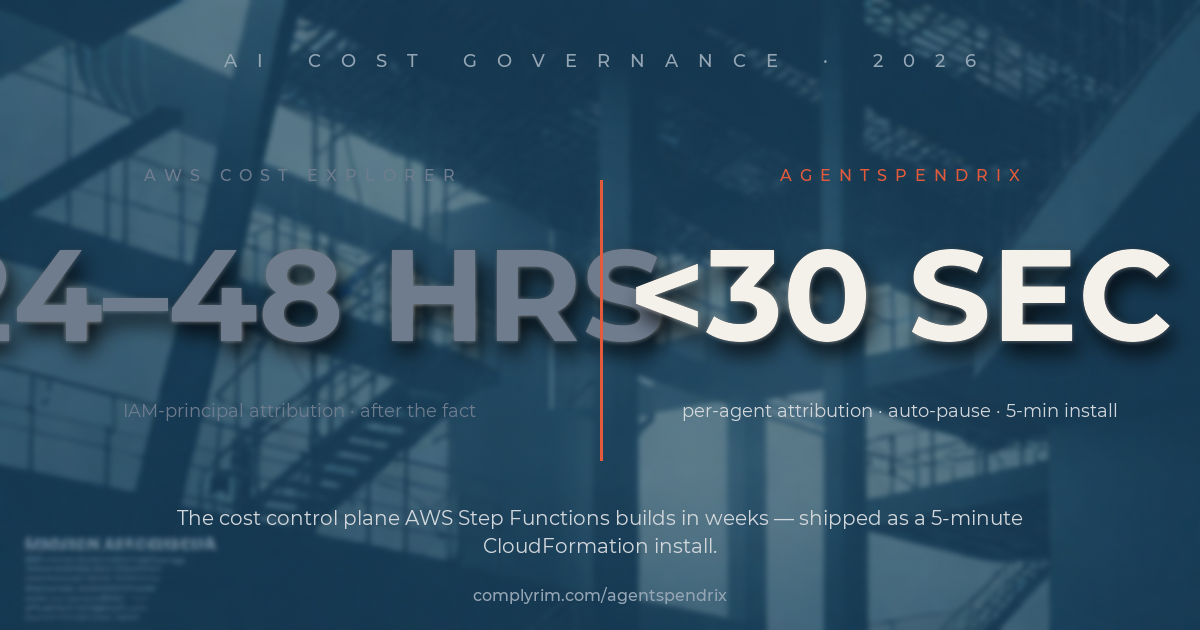
- Per-agent cost tracking: Know exactly how much each agent is spending, not just aggregate AWS bills
- Budget controls and alerts: Automatic cutoffs when spend exceeds defined thresholds
- Audit-ready logs: Every agent action timestamped, attributed, and exportable for compliance review
- Authorization tracking: Record of who deployed each agent and what permissions were granted
- Anomaly detection: Alerts when an agent’s spend or behavior deviates from baseline